Jane Sonnenschein
-
Schreiben – mir selbst einen Weg zurücklassen
Dieser Text handelt davon, wie Schreiben dabei helfen kann, kleine Erinnerungen, Gefühle und alltägliche Momente festzuhalten, bevor die Zeit sie langsam verwischt. Schreiben hält die Zeit nicht auf, aber es kann uns einen Weg zurücklassen – damit wir Jahre später… Continue reading

-
Writing: Leaving Yourself a Path Back
This essay reflects on writing as a way of preserving the small memories, emotions, and ordinary moments that time gradually blurs. Writing may not stop time, but it can leave us a path back—so that years later, we can still… Continue reading
-
写作,给自己留一条回望的路
这篇文章写的是记录和写作对于记忆的意义:很多看似普通的日子、情绪和片段,如果不留下来,最终都会慢慢变得模糊。写作也许无法对抗时间,却能为未来的自己留下痕迹,让我们多年以后回头时,还能认出曾经的自己。 Continue reading
-
Die gefallenen Blätter zurück an den Baum bringen – die Art zu schreiben, die ich erst später verstanden habe
Dieser Text handelt davon, wie ich gelernt habe, einzelne Gedanken, Erinnerungen und Essays nicht mehr als voneinander getrennte „Blätter“ zu betrachten, sondern als Teile derselben inneren Struktur. Seit sie wieder zu derselben „Baumkrone“ gehören, fühlt sich Schreiben für mich weniger… Continue reading

-
Putting the Fallen Leaves Back on the Tree: The Way of Writing I Only Learned Later
This essay is about discovering that sustainable writing needs more than a constant supply of new topics. When separate memories, thoughts, and essays began to connect back to the larger structure of my life, writing stopped feeling like an endless… Continue reading
-
把落叶接回树上, 我后来才懂得的写作方式
这篇文章写的是我后来才明白的一种写作方式:真正让我安心的,不是不断寻找新的话题,而是让每一篇文章都重新回到同一棵“树”上。那些看似零散的经历、情绪和思考,一旦找到彼此之间的结构,写作就不再只是消耗,而开始持续生长。 Continue reading
-
Der wahre Wendepunkt im Leben ist nicht, plötzlich reich zu werden
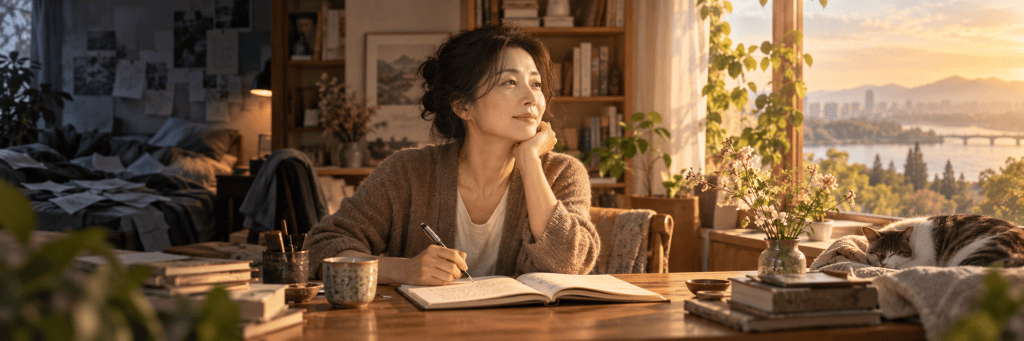
Dieser Text handelt von der Erkenntnis, dass der eigentliche Wendepunkt meines Lebens nicht kam, als sich meine äußeren Umstände plötzlich verbesserten, sondern als ich begann, meine eigenen Erfahrungen wirklich zu verstehen und mich nicht mehr ständig von Angst treiben zu… Continue reading
-
The Real Turning Point in Life Is Not Getting Rich
This essay is about realizing that the real turning point in life did not come when my circumstances suddenly improved, but when I finally began to understand my own experiences and stopped being driven by fear. Writing helped me look… Continue reading
-
人生真正的转折,不是发财
这篇文章写的是我后来才明白的一件事:人生真正的转折,并不是某一天突然发财,而是在低谷里慢慢看清自己、理解经历,并重新站稳。问题可能还在,生活也没有突然变简单,但当一个人不再慌、不再把希望完全寄托在外界时,人生其实已经开始转弯。 Continue reading
-
Wenn man beim Schreiben nicht mehr nach Themen suchen muss
Dieser Text erzählt davon, wie sich mein Schreiben verändert hat, seit ich aufgehört habe, ständig nach Themen zu suchen und mich zu neuer Produktion zu zwingen. Schreiben wurde für mich leichter, als es nicht mehr nur um Leistung ging, sondern… Continue reading