Series Introduction | To Understand China, We Cannot Skip Its Historical Wounds
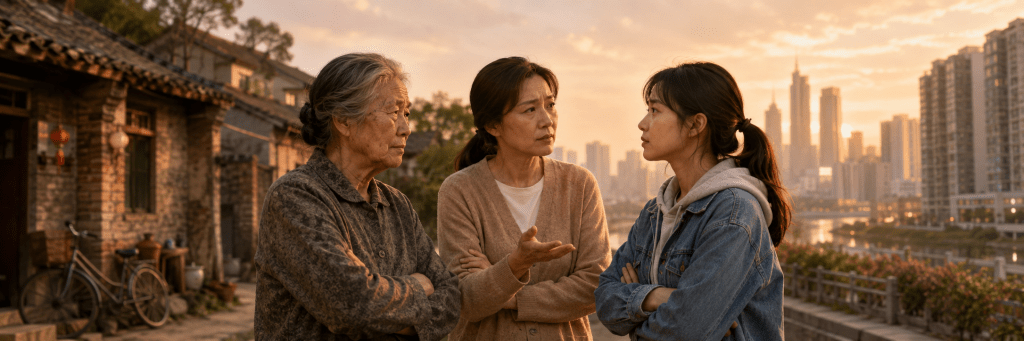
Many times, when we talk about China, it is easy to fall into one of two extremes. One is to speak only of national development, national rejuvenation, and great changes of the times, until the pain of concrete human beings is covered by grand narratives. The other is to judge the past only by today’s values, so that the historical conditions from which a people emerged — hunger, poverty, war, patriarchal order, and fear for survival — are lightly skipped over.
I increasingly feel that to truly understand China, we cannot look only at today’s high-rise buildings, high-speed trains, city lights, and economic achievements. Nor can we look only at the tears of individuals whose lives were hurt by their times, sacrificed by their families, or changed by policies. We have to hold both together: to see the hardship through which the country has come, while also refusing to let any concrete person lose their voice inside a grand narrative.
This series is not written to defend son preference, sacrifices demanded by history, or the compression of individual rights. Nor is it meant simply to accuse the previous generation or a certain system. It is more like a looking back: at old wounds left inside families, at memories of hunger left in the body, at the sense of “a broken country and a broken home” inside the Chinese emotional structure, and at the Chinese historical experience that Western human-rights language sometimes cannot fully explain.
Understanding does not mean forgiveness.
Understanding means knowing where the wound came from, so that it does not continue to be passed down from one generation to the next.
First Essay | They Were Not Born to Prefer Sons; They Were Soaked in Bitterness
By Jane Sonnenschein July 5, 2026
Simone de Beauvoir wrote, “One is not born, but rather becomes, a woman.”
I came across a short clip from a television drama on WeChat Channels. At first, it looked like an ordinary family argument. But I watched it for a long time.
The argument began with an Omega watch. The mother suspected that her daughter had stolen her watch. At first, the daughter still tried to defend herself. But later, she completely broke down. She said: You say I stole a watch from you. But back then, what you stole from me was my entire life.
It turned out that during the era of shangshan xiaxiang¹, her father had originally arranged a factory position for her. For an urban youth of that time, such a position meant that she would not have to go to a distant and difficult place as a sent-down youth. She could stay in the city, have a relatively stable job, and keep the life that might have unfolded for her.
But a few days later, her mother told her that the position was gone. She had to go to Jiangxi to receive “re-education by poor and lower-middle peasants.”² Many years later, she found out that it was not that the position had disappeared. Her mother had given it to her son.
That son later went to the United States, earned dollars, and walked onto a completely different path. She herself went to Jiangxi, soaked in muddy water, with leeches crawling over her feet, living a life she might never have had to endure. She accused her mother of favoritism. She accused her mother of giving everything good to her son, and using her daughter’s life to pave the road for him.
What hurt even more was that her own daughter stood nearby. Seeing her grandmother heartbroken, the girl instead told her mother to stop talking. At that moment, the mother completely broke down. She said: My own mother did not care about me. So after I gave birth to a daughter, I wanted to raise her like a little princess. I begged my own mother to bring you back to Shanghai. But after I came back for so long, you have never once called me “Mom.” You look at me as if I were a stranger. When I want to hug you, you push me away. Crying, she asked: What exactly did I do wrong?
In this scene, there are three generations of women.
One mother favors her son and sacrifices her daughter. One daughter is wounded by her family of origin and then desperately tries to make it up to her own daughter. One granddaughter stands nearby, still unable to understand the wound carried by her mother’s generation.
In the comment section, many people were furious. Some said: She herself is clearly a woman, so why would she treat her daughter like this? Others said: Why must women make life difficult for other women?
This anger is understandable, because the daughter who was sacrificed is a real victim. What she lost was not a watch, a piece of clothing, or a meal. What she lost was a possible life path, one that might have been completely different.
But while brushing my teeth, I kept thinking: I actually understand women of that generation.
Understanding does not mean forgiveness. Understanding also does not mean defending the harm they caused. The daughter’s pain was real. Her fate was truly rewritten.
But if we only curse that mother as a “bad woman,” “biased,” or “son-preferring,” we miss something deeper. She did not grow into that person out of nowhere. She was slowly shaped that way by a long patriarchal society, by poverty, fear, pressure around old-age support, and the concrete reality of needing someone to hold up the household.
In several thousand years of China’s feudal society, a woman was never truly an independent person. At home, she obeyed her father; after marriage, her husband; after her husband’s death, her son.³ She did not enter society as “who I am,” but was placed there as someone’s daughter, someone’s wife, someone’s mother. The value she created was often not recognized. Her labor was taken for granted. Her body was expected to give birth. Her old age had to depend on her son. A daughter, however good she was, was still “someone who would marry out.” A son, however incapable, was still “the family’s own incense and bloodline.”
This cannot be explained by simply saying “old-fashioned thinking.”
Behind it was a very real survival structure.
Especially in rural areas, whether a family had a son made a huge difference. Having a son meant there was a male member to support the household’s public standing. It meant someone could step forward if the family was bullied. It meant someone would carry the funeral banner, break the mourning bowl, and send the elder off at death. It meant that in the village, others would not dare to bully the family too easily.
Without a son, especially for a widow without sons, life in many places meant being easily bullied. The edge of one’s field might be taken. Trouble might come directly to the door. A household without a male member was like a doorway without a beam.
My grandmother was such a person.
She became a widow when she was young and had no son. For a woman in the countryside, holding up a household alone was extremely difficult. Families with sons could come and bully her again and again. What could she rely on? A breath of stubbornness, a refusal to give in, sheer endurance, and the toughness that women of that era were forced to grow.
But precisely because they had lived through this, women like her knew too well what it meant to have no son. So they wanted sons. They hoped for sons. Not because they were born loving men more, but because that society had taught them that if a woman had no son, her old age, dignity, and sense of safety might all have nowhere to land.
My mother also preferred sons.
I was only relatively lucky. After my older brother was born, he died of illness in the hospital and did not survive. Later, I became the only daughter, because the younger sister my mother risked giving birth to was also given away. If there had been an older brother or a younger brother in the family, I am almost certain that my mother’s son preference would have shown itself. Both she and my grandmother had very clearly wanted a son. In their experience, having a son meant the family had support, public standing, and a way out.
When I was young, I found this very hard to understand. Only later, as I slowly grew older and heard more and more stories from their generation, did I begin to understand: many women did not fail to know that daughters suffer. They knew too well how bitter life could be for a woman without sons in that society.
So they transferred the suffering they themselves had endured onto their daughters.
That is the saddest part.
A woman may be wounded by patriarchal order for her entire life, but in the end she may not necessarily resist that order. Very often, she chooses to adapt to it, maintain it, and even continue training the next generation for it. Because she does not believe that the world will truly protect women. She only believes that a son can support her. She may love her daughter, but she is even more afraid that without a son, she will have no one to rely on. She may know that her daughter is wronged, but when fate demands a choice, she still gives the better opportunity to her son.
This is not because she is kind. Nor is it because she is evil.
It is because she lives inside a cruel system, and she has believed the answer that system gave her.
Yang’er fanglao,⁴ continuing the family line, dingmen lihu,⁵ breaking the mourning bowl and sending off the dead⁶ — these phrases today sound covered with the dust of an old era. But for many people of the previous generations, they were not abstract ideas. They were living rules.
Not having a son meant being laughed at. Not having a son to conduct the funeral was shameful. Having only daughters, in many rural contexts, meant the family door was unstable, the family incense would not continue, and old age would have no support.
Our generation, especially those who grew up after urbanization, education expansion, women’s employment, and the one-child policy, already finds it very difficult to fully feel that fear. We say: daughters can also support their parents in old age. Daughters can also hold up a family. Daughters can also inherit property. Daughters can also do very well.
Yes, all of this is true.
But the fact that these ideas can now be said already means we are standing after social change has taken place.
Many women of the previous generations did not grow up from that position.
They came from the old era and were then quickly pushed into the new one. After the founding of the People’s Republic of China, slogans said that women could hold up half the sky.⁷ Legally, men and women were equal. Women could also study, work, and take part in labor.
But changes in law and slogans do not mean that thousands of years of family ideas, rural order, and gendered fear disappear overnight. The software was upgraded, but the hardware could not keep up so quickly. The times changed, but the old fear inside people’s hearts remained.
So we see very complicated images.
A mother who is herself a woman gives the factory position to her son and sends her daughter to a distant and difficult place. A mother who has herself suffered from son preference continues to favor her son. A mother says with her mouth that daughters are caring, but in her heart she still feels that a son is the root.
They are victims on one side and perpetrators on the other. They were oppressed by the old system, and yet they continued to pass on the harm of that system.
This is the hardest part of history to explain clearly.
If we look only at the result, of course we can criticize them. They truly hurt their daughters. They truly made many girls feel from childhood that they were less important than boys. They truly gave more opportunities, food, education, resources, and love to their sons.
Many daughters spend their whole lives asking: Why am I also your child, but always the one to be sacrificed?
This question cannot be lightly erased with the phrase “that was the era.”
But if we only judge these mothers, we cannot see why they grew into this shape. They were not living in a society that respected women, protected women, and recognized women’s value, and then deliberately chose to prefer sons. They were trained into that shape by a world that kept telling women: you must rely on men, rely on sons, rely on the husband’s family, rely on the continuation of the family line.
Their hateful side and their pitiful side are tangled together.
This is also why I increasingly dislike using the phrase “Why must women make life difficult for women?” to summarize such things. That sentence names the result, but not the cause. Of course women should not make life difficult for women. But if a society has spent thousands of years telling women that they must live by depending on men, that sons are more useful than daughters, and that daughters will eventually belong to someone else’s family, then many women, in search of their own safety, will actively step into that system.
They were not born to prefer sons.
They were soaked in the bitter water of a patriarchal society.
So when we see the mother in that television drama giving her daughter’s factory position to her son, of course we must see the daughter’s pain. What was stolen from her was not a watch, but a life. While she was soaking in the muddy water of Jiangxi, her younger brother may have been standing inside the city life that should have belonged to her. This wound should not be covered by any grand narrative.
But we must also see that this mother did not come from a vacuum. Behind her stood a long old era. Behind her stood the fear of yang’er fanglao. Behind her stood the belief that “a daughter who marries out belongs to another family.” Behind her stood the reality that a woman without sons could be bullied, looked down upon, and treated as someone with no backing.
Understanding this is not meant to make the daughter shut up.
Quite the opposite. It is meant to help us see more clearly that harm did not begin with one particular mother. She was only one link in a very long chain. What truly needs to be seen is the old order that pushed women into this shape, and then made women continue to hurt other women.
If we only curse one mother, then after the cursing is over, the story ends.
But if we see where she came from, then perhaps we can make sure the story does not continue in the same way.
Notes on Chinese Historical and Cultural Context
¹ Shangshan xiaxiang literally means “going up to the mountains and down to the countryside.” It refers to a Mao-era movement in which many urban youths were sent to rural areas to live and work. For many young people, especially those from cities, this changed the course of their education, work, family life, and personal future.
² Re-education by poor and lower-middle peasants was a political phrase from that period. It reflected the idea that urban youths and educated young people should learn from peasants through rural labor and collective life. In practice, for many individuals, it meant harsh living conditions and a deeply disrupted life path.
³ This refers to the traditional Confucian idea often summarized as the “three obediences”: before marriage, a woman obeys her father; after marriage, her husband; after her husband dies, her son. It shaped how women were placed inside family and social order for centuries, even though real life always varied by region, class, and period.
⁴ Yang’er fanglao means “raising sons to support one in old age.” In traditional Chinese society, especially where state welfare was weak or absent, sons were often seen as the main source of old-age security, ritual continuity, and family protection.
⁵ Dingmen lihu literally means “to prop up the doorway and establish the household.” It refers to the idea that a male heir holds up the family line, household status, and public standing. In many rural settings, having a son could affect how safe, respected, or protected a household felt.
⁶ Breaking the mourning bowl and sending off the dead refers to certain traditional funeral expectations tied to sons or male descendants. In some local customs, sons had specific ritual duties at a parent’s funeral. Not having a son could therefore become a source of shame, anxiety, or social judgment.
⁷ “Women hold up half the sky” was a famous slogan associated with the socialist period in China. It expressed the ideal of gender equality and women’s participation in labor and public life. But slogans and laws could not immediately erase deeply rooted family structures, rural customs, and old fears around lineage and old-age support.
This essay is also available in other languages:
Chinese version: 她们不是天生重男轻女,而是从苦水里泡出来的
German version: Sie wurden nicht als Frauen geboren, die Söhne bevorzugen; sie wurden im bitteren Wasser geformt


Leave a Reply